

Use Solar Powered Water Pumps to Reduce Your Farm’s Energy Costs
Attention Farmers: See case study data below. This utility paid for farmers to install their solar energy systems!
Farms need water. On some farms, there are only so many ways to get that water to all the remote places that need it, and water pumps provide the best solution.
But pumping water requires power, and unless you’re still a fan of hand-cranking, you’ve had to choose between fuel-powered generator pumps, or powering your pumps from the electric grid. For really large agricultural operations, these water pumping methods may still be the most affordable option.
But for smaller, mid-size, and remote uses, or for places that only need water for a few months like a summer cattle water tank, a solar water pump isn’t just better for the environment — they’re better for your wallet.
Electricity and Fuel Costs Keep Rising
Relying on traditional sources of power for remote or seasonal water pumping is becoming ever more expensive.
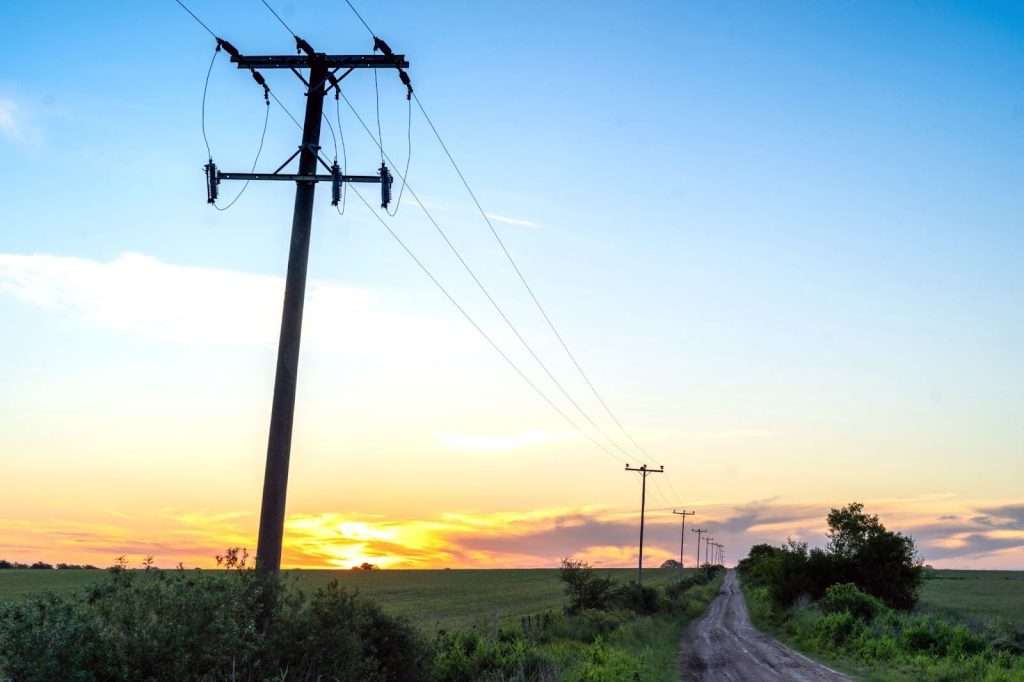
Electric line installation
If you want to use electricity, installing electrical lines out to remote locations that draw from local wells can cost up to $20,000 per mile. That doesn’t include the monthly usage bill either, and utilities continue to raise their per-kilowatt-hour rates.
You either have to bury the line or create a network of above-ground power lines. But if you’re doing all that for a situation that only needs a small amount of power, you may never recover the costs of installation.
And if you have multiple remote or seasonal power needs, the costs of professional installation become an avalanche of impossibility.

The fuel you purchase also has to be transported to wherever the remote water pumps are located. This adds a time-consuming task to your day, and involves all the other costs and equipment required to transport it.
Lastly, using fuel power can degrade your quality of life in other ways, such as
- Risk of spillage
- Odors
- Noise
For large agricultural operations, these are all costs and realities you probably have to put up with, because pumping water uses large quantities of energy.
But for smaller operations, a solar powered water pumping system provides a far better choice than electricity or fuel, because such a system addresses all the drawbacks of the others.
Solar powered water pumps — the cost effective solution
According to a 2011 USDA report:
“PV systems are very cost effective for remote livestock water supply, small irrigation systems, and pond aeration.”
And that report was in 2011. They’re even more affordable today as the sun’s still shining and solar prices are coming down, and fuel and electricity costs keep rising. Let’s consider some of the benefits of using solar water pumps for irrigation, cattle watering, and other agricultural uses.

Minimal maintenance
Even way out in the country, solar water pumping systems require little maintenance. Unlike their fuel counterparts, you won’t have to worry about the energy producing aspect of your pumps breaking down or running out of fuel. A solar panel just keep working.
There’s no last minute drive out to the farthest water pump because it ran out of fuel.
See How much would you save?

One-time easy installation
To install solar panels that will power your water pumps, you don’t need to dig up miles of ground to install power lines, which will disrupt your fields and upset your cattle. And once the solar powered water pump system is installed, it just works, just like the sun.
Perhaps the best advantage is — it’s fast. Installing solar panels in selected spots doesn’t take nearly as long as burying electrical lines to all your distant cattle watering holes and other remote water needs.
Far lower costs
At $20,000 per mile of installed lines — electricity just doesn’t make economic sense for remote water pumping needs. And with ever-rising fuel prices, you won’t be saving much using that approach either.
For livestock, pond aeration, aquaculture, and small to mid-sized irrigation — solar powered water pumping is actually the most affordable option. While solar is also a great long-term option for other scenarios, there are usually higher initial costs that take some time to recover.
But when it comes to farm water pumping, especially remote locations, solar power combines the best of both worlds — affordability and environmental stewardship.
Higher quality of life
A Solar water pump obviously can’t spill any fuel, so you won’t have to worry about cleaning anything up. And, they have no odor and make no noise.
Solar powered water pumping case study: Verendrye
Verendrye Electric Cooperative is an energy utility in North Dakota, supplying energy across six counties and over 4000 square miles.
With so many remote locations needing water for only a few months of the year, way back in 1990 they saw the potential for solar pumps to cut their costs. They began leasing small solar PV systems to farmers so they could power the watering pumps that feed their livestock out in pasture. The lease was just $18 per month.
This arrangement helps both Verendrye and the farmers.
The farmers have dependable and nearly free electricity for the few months of the year they need it. No worries about power outages. And they love the idea of not paying $20,000 per mile to install electric lines they will barely use.
The utility benefits because they don’t have to pay to maintain electric lines that hardly get used.
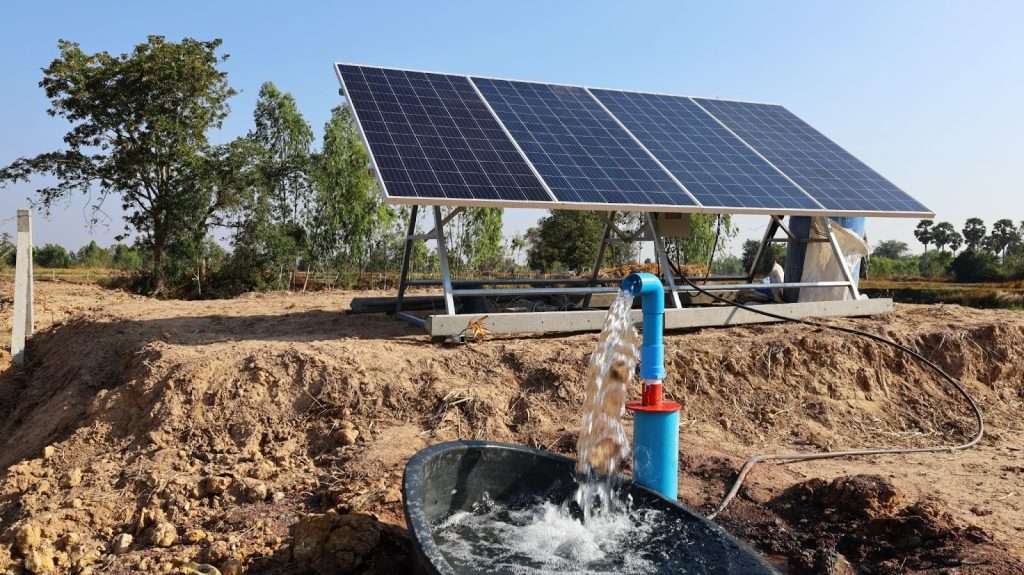
The utility paid for the solar water pumps
So far they’ve installed over 200 solar pump systems. In this instance, the average PV system size is small — just 130 watts, and waters 20-90 pairs of cattle per system, which is on average a 3-day water supply.
The average cost for the system is $3000. Verendrye pays for this entire cost, which includes the solar panels, the tracker, the controllers, and the installation. The farmer pays about $500 for the water pump.
The fact the utility would pay for solar panels for farmers’ water pumping tells you how economically beneficial it was for both parties.
Even better, a REAP grant was awarded to support this program to the tune of $100,800.
If a solar panel is durable enough to survive harsh North Dakota winters, they can handle any other extreme weather. Obviously your utility might not offer the same deal as the one Verendrye did, but the cost-benefits of solar water pumping systems remain just as strong.
So if you have a farm, and it’s costing you tons of money to pump water to keep your operations running, you might be able to save a lot of money by installing a sun-powered, solar water pump.


